The concept of a serpent emerging from the porcelain depths of a toilet is often dismissed as the stuff of urban legend, a campfire story designed to prickle the skin and keep children from wandering into the dark. However, for a handful of unfortunate individuals around the globe, this nightmare has transitioned from the realm of myth into a terrifying, visceral reality. While these incidents remain statistically rare, they represent a unique intersection of human infrastructure and wildlife behavior, highlighting the surprising ways that nature can reclaim civilized spaces. In regions ranging from the humid suburbs of Thailand to the rural outposts of South Africa and the sun-bleached plains of Texas, the “toilet snake” has become a documented, albeit frightening, phenomenon.
The biology of a snake makes it uniquely suited for navigating the complex labyrinth of modern plumbing. Herpetologists note that snakes are master contortionists with a natural affinity for tight, dark, and damp spaces. To a snake, a sewer pipe or a drain line is not a man-made utility, but a subterranean tunnel that offers protection from predators and a potential source of prey. During periods of extreme weather—such as the torrential monsoons of Southeast Asia or the blistering droughts of the American Southwest—snakes often seek out moisture and temperature-controlled environments. Toilets, with their standing water and connection to cool, dark pipes, become accidental sanctuaries for these opportunistic reptiles.
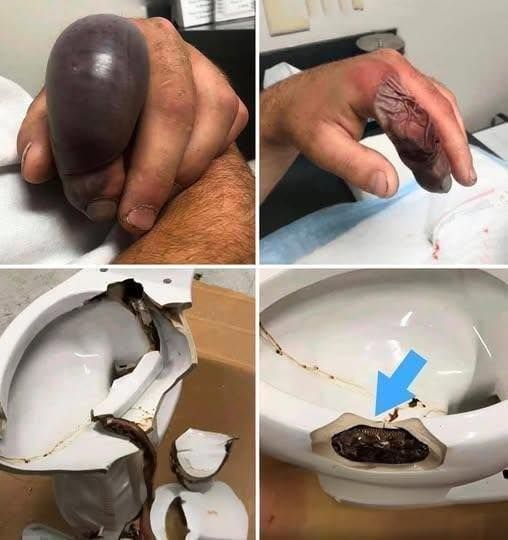
Perhaps the most infamous case in recent memory occurred in Thailand, a nation where the rapid expansion of urban centers often encroaches on the natural habitats of the reticulated python. A resident was using his home bathroom, oblivious to the fact that a twelve-foot python had navigated the S-bend of his plumbing. The man was struck on the testicles, a terrifying and agonizing attack that required emergency surgery and a prolonged hospital stay. While the man survived, the imagery of the encounter went viral, serving as a grim reminder that even the most private corners of a modern home are not entirely sealed off from the wild.
The danger is not limited to non-venomous constrictors like pythons. In South Africa, a Dutch tourist experienced a life-altering encounter when a Cape cobra—one of the continent’s most venomous serpents—struck him while he was using a restroom in a rural nature reserve. The neurotoxic venom of the cobra made the injury particularly grave, leading to a medical emergency that garnered international headlines. This case underscored a critical geographic reality: in areas where highly venomous species thrive, the stakes of a bathroom encounter are exponentially higher. The attack left the victim with severe physical trauma and served as a catalyst for renewed safety protocols in safari lodges and rural guest houses.
The phenomenon is not exclusive to tropical climates. In the United States, specifically in states like Texas and Florida, snakes are frequently found in bathrooms. A Texas woman once reported being bitten by a non-venomous rat snake that had coiled itself just beneath the rim of the bowl. While rat snakes pose no lethal threat to humans, the psychological impact of being bitten in such a vulnerable state is profound. Similarly, in Australia, where the fauna is famously diverse, carpet pythons are known to enter homes through roof vents or cracked pipes, occasionally ending up in the toilet bowl. These incidents, while usually resulting in minor physical injuries, often require the intervention of professional snake catchers to safely remove the animal without causing further harm to the snake or the homeowner.
Beyond the immediate physical wounds, the “toilet snake” phenomenon carries a significant psychological burden. Survivors of these attacks often report long-term trauma, characterized by a persistent anxiety known as “toilet phobia” or “parcopresis.” The bathroom is traditionally viewed as a place of absolute privacy and safety; when that sanctuary is violated by a primal predator, the sense of security is shattered. Victims have described a permanent change in their habits, including a compulsive need to inspect the bowl or use bright lighting before sitting down. Psychologists note that this specific type of trauma can be difficult to treat because it involves a basic, daily necessity that cannot be avoided.
To understand how this happens, one must look at the flaws in building maintenance. Specialists explain that snakes typically enter the plumbing system through damaged sewer lines, open septic tanks, or vent pipes located on the roof. In some cases, snakes are chasing prey, such as rats or frogs, that have already entered the pipes. Once inside the plumbing, the snake follows the path of least resistance, which often leads upward toward the water trap of a toilet. Because snakes can hold their breath for extended periods and are excellent swimmers, the water in the S-bend serves as a minor hurdle rather than a barrier.
While the fear is palpable, experts emphasize that there are practical steps to mitigate the risk, particularly for those living in high-risk regions. Maintaining the integrity of home plumbing is the first line of defense; ensuring that there are no cracks in the pipes and that septic tank covers are securely fitted can prevent entry. Furthermore, installing “flap valves” or “non-return valves” in the sewer line can allow waste to exit while preventing wildlife from swimming upstream. In rural areas, keeping the bathroom door closed and ensuring that window screens are intact prevents snakes from entering the room through more conventional means before finding their way into the fixtures.
Ultimately, the reality of snakes in toilets serves as a humbling reminder of the thin veil between human civilization and the natural world. Our infrastructure is integrated into an ecosystem that existed long before the first pipe was laid. While the “toilet snake” may be a rare occurrence, its existence encourages a healthy respect for nature’s adaptability. For the survivors, the lesson is one of resilience; for the rest of the world, it is a reminder to perhaps glance down before taking a seat. Awareness, rather than blind panic, remains the most effective tool in navigating these unusual and frightening encounters with the wild.